Friday, April 1, 2011

This might seem like a really, really random thing to make a blog on, but Gaudi enjoyed making lamppost. This one in particular is really cool. They are called Viv Lamp-posts.

In early 1910 a friend of Gaudi's recommended that he should take a vacation in the nearby town of Vic, 37 miles or so from Barcelona. Gaudi stayed in Vic for 3 weeks during the month of may in 1910. His friend meant for Gaudi to be on vacation and only be relaxing, but once Gaudi learned that Jaume Balmes (the famous Catalan Philosopher) was going to be celebrated over his birth, Gaudi planned to make celebratory lamp-post just for the occasion. He sketched 2 lamp-post with iron arms, and the common four-armed Gaudinian cross on the top. The plan went through and the lamp-post were honored on September 7th 1910.

*Sadly in 1924 it was decided, that they needed to be demolished.
Above Left the lamp-post being celebrated Above Right The lamp-post being torn down
Sources: http://www.gaudiclub.com/ingles/i_vida/fotobras/vic/vic02.jpg
http://www.gaudiclub.com/ingles/i_vida/fotobras/vic/vic01.jpg
http://www.gaudiclub.com/ingles/i_vida/farolvic.html

Wednesday, March 30, 2011

Architecture, Gaudi, His works

Gaudi, has made many famous buildings, gates/walls, lamppost and other architectural designs in Spain. A few are: Casa Calvet, Palacio Episcopal de Astorga, Schools of Sagrada Familia, Casa Vicens, Finca Güell, Finca Miralles,Casa Batlló, Park Güell and La Pedrera (This was his last great work). In this blog I was going to focus on one of my favorite buildings Gaudi made called Casa Vicens. A stock broker named Señor Manuel Vicens I Montaner, had wanted Gaudi to build a house on the lot that he acceded from his mother. Gaudi built the house against the wall of another house and it left plenty of room for a large garden. For the garden Gaudi made a large fountain, but sadly it is no longer standing today, because someone bought some of land and it was destroyed. The garden is surrounded by a wall made of stucco and the entrance is a gate made from Iron molded to look like a palm leave. The house and garden were finished in 1883

casa_vicens-Gaudi.jpg


77.jpg

First Pictuere is Casa Vicens Second picture is The garden gate

sources: http://www.gaudidesigner.com/data/file/77.jpg

http://www.cocoonbarcelona.com/blog/wp-content/uploads/2009/12/casa_vicens-Gaudi.jpg

http://www.gaudiclub.com/ingles/i_vida/vicens.html

Tuesday, March 29, 2011

Spain, Architecture, Antoni, Gaudi

Before I start this blog I would like to announce that the 2 pictures on my first blog seem to be the only ones I could find. The reason for this is that, he avoided cameras so there are few pictures of the famous architect.
Gaudi was in the military from 1874 through 1877. he enlisted at the age of 22, and was never in combat, during the time he served for Army Infantry in Barcelona. He was a very good student in school (as a child when he was able to go) and did very well in geometry. For his university years Gaudi attended, the Providencal School of Architecture. He often missed classes here, but he periodically went to the library. Gaudi's mother died a little while after he began to study for his architecture degree in 1876.

Monday, March 28, 2011

Spain, Architecture, Antoni Gaudi

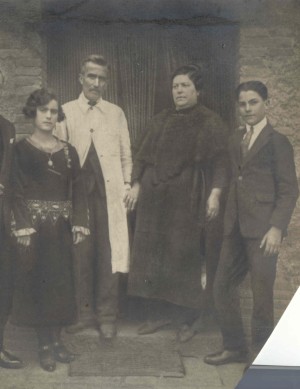
Antoni Plàcid Guillem Gaudí was born on June 25, 1852. Some people say he was born in Baix Camp, In the Tarragona Providence, others say he was born halfway between Reus and Riudoms in his family's home in the country. No one knows for sure. His father was Francesc Gaudí Serra a blacksmith. His mother, Antonia Cornet Bertran the daughter of coppersmiths. Antoni was the 5th child in his family, and ended up living the longest. Antoi had a rheumatic disease that restriced him to moving about on a donkey or to stay at home (it hurt for him to walk). He didn't play with other kids and missed a lot of classes (at school). ABOVE LEFT, PICTURE OF GAUDI ABOVE RIGHT, GAUDI AND FAMILY sources: http://www.gaudiclub.com/ingles/i_vida/i_menu.html http://blogs.vassar.edu/envisioningspainsborder/files/2011/02/antoni-gaudi.jpg http://www.gaudiclub.com/esp/e_update/jun09/Gaudi_familia_Alpiste_low.jpg

Friday, March 18, 2011

Dominique, Art, Kahlo


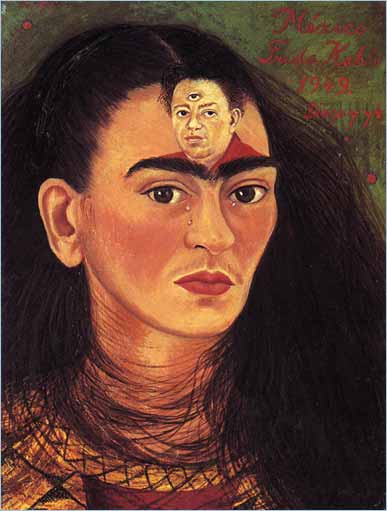
I will focus on another famous self portrait by Frida Kahlo in this post but, this one shows her love/hate relationship between Diego (her husband) and her. The painting is called Diego and I it was made in 1949 using oil paints on a medium canvas. As I mentioned in my first post Frida and her husband had a lot of conflict throughout their marriage. This portrait shows her pain in their marraige, but she still loved him. She once said "I suffered two grave accidents in my life. One in which a streetcar knocked me down....the other acciedent is Diego." This shows how much she thought about Diego, and even though they got divorced, remaried and a lot of other problems Frida still stuck wih Diego untill she died.

THE SOURCES BELOW ARE FOR ALL MY POST THAT FOCUS ON 1 PAINTING:
http://www.writedesignonline.com/history-culture/Kahlo/works_diegoandi.jpg
http://www.pbs.org/weta/fridakahlo/

Dominique, Art, Kahlo,

I am going to focus on 1 painting in this post because it shows something that has been a struggle between Mexico and the U.S. for a long time. This is another famous painting by Frida Kahlo called Self-Portrait on the borderline between Mexico and the United States. It was finished in 1932 and is a oil painting on a medium sized canvas. Khalo painted this 2 years after her husband Diego had a few commissions to paint murals in the United States. She and her husband stayed there for 4 years. She hated it living in the U.S. and got homesick, so she created this portrait to show her pain.
  • Frida Kahlo Oil Painting On Canvas Self-Portrait on the Border Line Between Mexico and the United States 1932

Monday, February 28, 2011

Dominique, Kahlo's paintings

The most influenced cultures in Kahlo's work are Mexican and American which is characterized with folk art. She once said "I never painted dreams. I only painted my own reality." Kahlo uses bright colors and symbols to show what she feels in each painting. Lots of her paintings include pictures of monkeys, which is a symbol of lust in Mexican mythology, but she uses them as a protective symbol. Kahlo has created over 200 paintings, sketches and drawings that show her physical  and emotional pain in her life.55 of her paintings are self portraits. 

frida-kahlo-viva-la-vida-2.jpg

Viva La Vida was Kahlo's finnal painting, made in 1954

460px-frida_kahlo_self_portrait.jpg

Self Portriat with Monkeys was made in 1940

frida-diego.jpg

Frieda y Diego Rivera 1931

Links for pictures:

http://www.artquotes.net/masters/frida-kahlo/frida-diego.jpg

http://overheardinthesacristy.files.wordpress.com/2008/05/frida-kahlo-viva-la-vida-2.jpg

http://fullmoonfever.files.wordpress.com/2007/11/460px-frida_kahlo_self_portrait.jpg

Sources: http://en.wikipedia.org/wiki/Frida_Kahlo

http://www.fridakahlo.com/

Sunday, February 27, 2011

Dominique, Mexico, Coyoacán, Artist, Frida Kahlo

Magdalena Carmen Frieda Kahlo y Calderón was born in Coyoacán Mexico on July 6, 1907. Kahlo was diagnosed with polio at the young age of 6 in her left leg making it thinner than her right leg. She may have also suffered from Spina Bifida another disease. The Mexican Revolution begun in 1910 when Kahlo was 3 and later in her life she clamied she was born in 1910 so that she would automaticly be associated with the Revolution. Kahlo had a terrible accident on September 17, 1925 at teh age of 18, when the bus she was ridding in smashed into a trolly car. She suffered from a broken spinal column, broken ribs, a broken collerbone, and fractures in her right leg along with a dislocated shoulder and foot. She slowley recoverd and eventualy was able to walk once agian. During her recovery in a full body cast her mothr built her a easl and her father lent her some paint and brushes so she could do art from her bed. In 1929 Kahlo married Diego Rivera a young Mexican painter. They had many problems with temper and devorced in 1939 but remaired again in 1940 (odd right!) they still had many problems in their 2 marriage but stayed married. Frida Kahlo died July 13, 1954 at the age of 47 years old, she had been ill the year before and had to have her right leg amputaed above the knee because of gangrene. Her body is held in a urn in fromt of La Casa Azul which is now a musame holding peices of her work.It wasn't untill many centuries after her death that Kahlo was reconized for her art.
http://www.hovied.com/wp-content/uploads/2010/07/frida-kahlo-biography.jpg
http://feministsforchoice.com/wp-content/uploads/2010/03/frida_kahlo_small1.jpg
The links above are pictures of Kahlo
The links below are sources
http://en.wikipedia.org/wiki/Frida_Kahlo
http://www.fridakahlo.com/

Friday, February 18, 2011

Cuba, Food, More recepies

Polvorones con Canela recipe - Cuban Cinnamon Sugar Cookies


1 cup (2 sticks) unsalted butter at room temperature or
1/2 cup butter and 1/2 cup shortening
1-1/2 cups sifted powdered sugar
1 Tbsp vanilla extract or brandy
2 cups flour
1/4 tsp sea salt
2/3 cup finely ground pecans or walnuts
1 tsp ground cinnamon (cassia)

Preheat oven to 325 degrees F. Beat the butter in a bowl with an electric beater until creamy. Add the 1/2 cup of powdered sugar and vanilla, and continue beating until light and fluffy. Mix in the flour and salt very gradually, a tablespoon at a time, until thoroughly incorporated. Add the nuts with the last of the flour. Cover tightly with plastic wrap and chill thoroughly. Using your hands, form the dough into 3/4" balls. Place on an ungreased baking pan about 1 inch apart.

Bake in a moderate oven about 15 minutes, or until the edges turn pale gold. Place the remaining cup of sugar in a shallow bowl or plate with the cinnamon.
Remove the cookies from the oven and, while still hot, carefully roll each in the powdered sugar mixture. Set aside until cooled completely and roll them again in the sugar, shaking off any excess.

The cookies can be eaten fresh or stored between layers of wax paper in an airtight tin for several weeks, (although by then the powdered sugar tends to get absorbed into the cookies). They also freeze well in airtight plastic bags.

Yield: 3 to 4 dozen cookies.

I was searching for recipes on http://icuban.com/food/

and http://www.tasteofcuba.com/cubanrecipes.html and found something interesting about the fruit Annonaceae part of the custard apple family, is grown locally in Cuba and can be used for food and medicine.


Sunday, February 13, 2011

Dominique, Cuba, Recipes and translations

I am going to give a few recipes for some of the foods I've talked about on my other blogs:
Cuban Ropa Vieja recipe
2 1/2 lbs flank steak, cut in strips
5 tablespoons oil
2 1/2 teaspoons minced garlic or 5 cloves garlic, minced
1 large onion, diced
1 green pepper, diced
1/4 teaspoon black pepper
1 (8 ounce) can tomato sauce
1 cup water
6 ounces of Sofrito Sauce (Main base for a lot of Cuban dishes and can be found in Latino Suppermarkets)

Heat 3 tbsp. oil in skillet on medium, brown meat on all sides. Remove from skillet, add remaining oil to skillet, stir in garlic, onion and green pepper and cook until translucent. Stir in black pepper, browned meat, tomato sauce, water and sofrito. Simmer until meat is tender and shreds easily, about 1 hour. Serve on top of rice.
Serves 6.

Cuban Black Bean Soup recipe - Sopa de Frijoles Negros (*) the ham is optional
1 lb. black beans, dried
1 cup of chopped onions
1 tblsp. butter or margarine
4 cups of water
1 beef bouillon cube
(*) 12 ounces of cooked lean Ham
2 bay leaves
1/2 teaspoon dried leaf Oregano
1/2 teaspoon salt
1 dried whole red pepper
1 cup of chopped green bell pepper

Sort and soak beans overnight, then drain and discard the water used for soaking. In a 4-quart pot, saute onion in butter or margarine until tender but not browned. Add soaked beans, 4 cups water, bouillon cube, ham (cut into 4-6 chunks), bay leaves, thyme, oregano, salt & red pepper.

Bring to boil; reduce heat. Cover and simmer until beans are tender, 1 to 1-1/2 hour. Remove 1 cup of beans from stew, mash in a bowl with potato masher or fork. Add mashed beans to stew; stir to thicken.

Remove ham and dice. Remove bay leaves and red pepper, if used and discard. Add diced meat and green pepper to beans. Cover and simmer 15 minutes. Serve beans over fluffy white rice.
Serves 4.

GLOSSARY
Arroz con Pollo-----> Chicken with rice
Ropa Vieja---------> Shreaded beef
Montuno-----------> Sautéd pork
Chicharos----------> Split pea soup
Sopa de Frijoles Negros--------> Black bean soup
Tostones------------> Twice fried plantin chips
Arroz con Leche-----> Rice pudding
Helado de Galleticas de Marina-------> Ice Cream with marina cookies (short bread cookies)

Sources: http://www.tasteofcuba.com/cubanrecipes.html <------ This website is AMAZING!!!!!

Tuesday, February 8, 2011

Dominique, Cuba, Drinks

The most popular drinks in Cuba include Cuban Coffee, Batidos which are Cuban milkshakes, Cafe Con leche a sweet coffee with milk usually drunk for breakfast, Ponche Habana which is Havana punch that some kids like to drink and Mojitos. Cuban Coffee has been said to be "strong enough to wake the dead" it comes in a very small cup because that is all you'll need to wake up in the morning.  Batidos come in many different flavors depending on what you like some of the more popular ones are banana, mango, vanilla and cream, Granadilla (passion fruit) and Papaya. Something interesting I learned while researching Batidos is that some Cubans like Batido de Mamey. Mamey is a fruit with a brown outside layer of skin that feels similar to a Avocado and the inside is the same texture as a kiwi. After being peeled the pink/orange flesh of a Mamey can be eaten but the seed is very toxic/poisonous.  
Websites:
http://www.wisegeek.com/what-is-a-mamey.htm
http://icuban.com/food/havana_punch.html


Monday, February 7, 2011

Dominique, Cuba, Desserts,Breakfast

Common Cuban desserts:
Flan- A sweet custard, eggy desert, coverd in a carmel sauce with the texture of jell-o
Rice- Pudding, A pudding made from cooked rice and eater usually topped with cinnamon
Chu -bite-sized puff pastries filled with meringue
Hurrizo-deep-fried doughnut rings
Fresh fruit- Coconuts, pineapples, papayas, bananas and mangos
Some cubans skip desert or just have coffee or sweet bread

flan-by-daffodilious-flickr.jpg

Above: Flan

rice-pudding-2.s600x600.jpg

Above: Rice Pudding
Breakfast foods
A normal cuban breakfast is very light and consist of fruits, tostada which is cuban bread that is buttered than toasted and to drink cafe con leche or Cuban Coffee that has a very strong taste

See full size image


To the left: Papaya
Sources: http://forums.gardenweb.com/forums/load/tropicalfruits/msg0617170818069.html
http://www.education.miami.edu/ep/littlehavana/cuban_food/cuban_food.html
Picture sources: http://sp.life123.com/bm.pix/rice-pudding-2.s600x600.jpg
http://mexicofoodandmore.com/wp-content/uploads/2009/03/flan-by-daffodilious-flickr.jpg
http://www.google.com/imgres?imgurl=http://www.papayalovers.com/papayas.jpg&imgrefurl=http://www.papayalovers.com/&usg=__c71VbXUAOBSnxXF8g-X7jnRV3ZY=&h=500&w=640&sz=32&hl=en&start=2&zoom=1&um=1&itbs=1&tbnid=WoaCH3wY4NhFWM:&tbnh=107&tbnw=137&prev=/images%3Fq%3DPapaya%26um%3D1%26hl%3Den%26safe%3Dactive%26client%3Dsafari%26sa%3DX%26rls%3Den-us%26tbs%3Disch:1&ei=EF1QTarzJMeUtwfinqm3AQ